Mediterranean heathers to grow in alkaline soils
Les bruyères méditerranéennes tolérantes au calcaire
Click on the images to enlarge them / Cliquez sur les images pour les agrandir
Heathers belong to the Ericaceae family, which includes many genera such as arbutus, rhododendrons, blueberries, etc. These plants are known for being easy to grow, low maintenance and giving the garden a natural look. However, most heathers thrive in acidic, moist soil. This is the case for summer heathers of the Calluna genus. If you have a garden with dry, alkaline soil, all is not lost, as some Mediterranean winter heathers of the Erica genus are more tolerant of alkalinity and can withstand dry conditions.
Les bruyères appartiennent à la famille des Ericaceae, qui comprend de nombreux genres dont les arbousiers, rhododendrons, myrtilles etc…. Ce sont des plantes réputées de culture facile, de faible entretien et donnant un aspect naturel au jardin. En fait, beaucoup de bruyères apprécient les sols au pH acide et l’humidité. C’est le cas des bruyères d’été du genre Calluna. Si vous avez un jardin au sol calcaire et un terrain sec, tout n’est pas perdu, puisque certaines bruyères méditerranéennes d’hiver du genre Erica affichent une tolérance au calcaire plus élevée et supportent le sec.
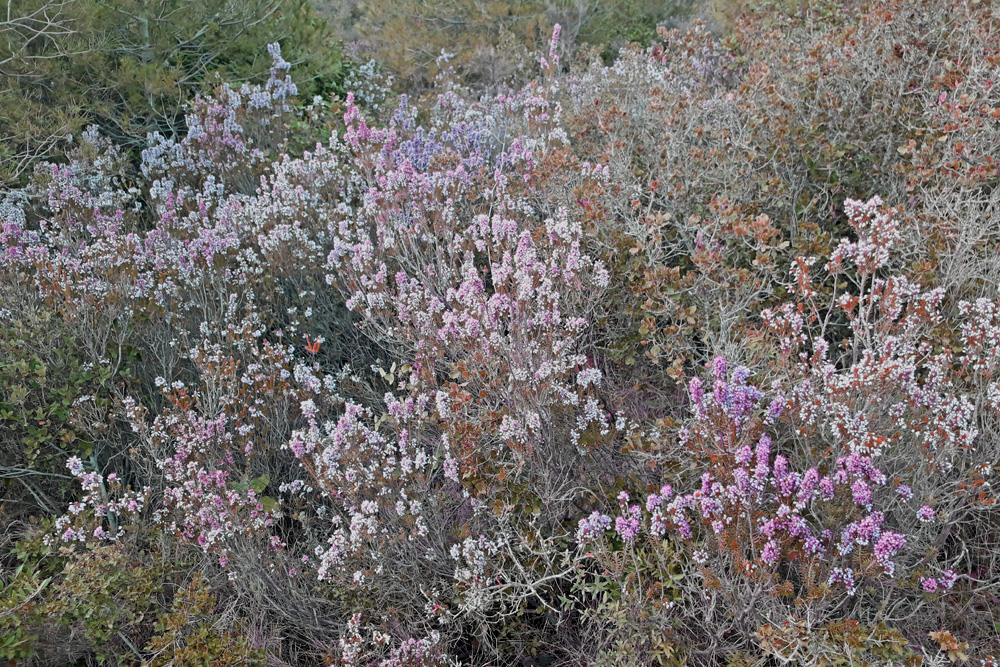
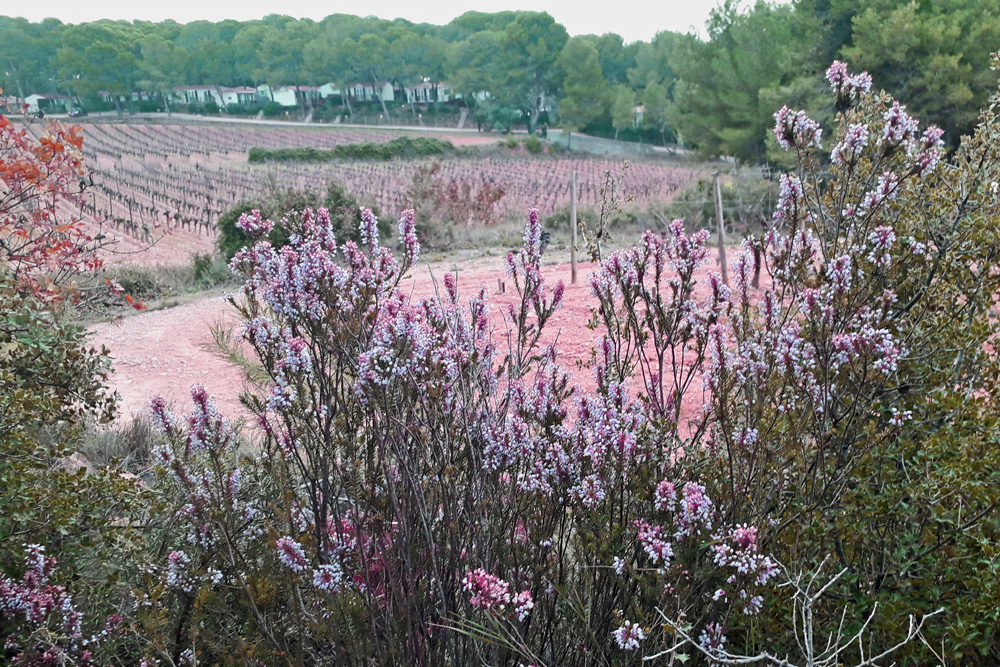
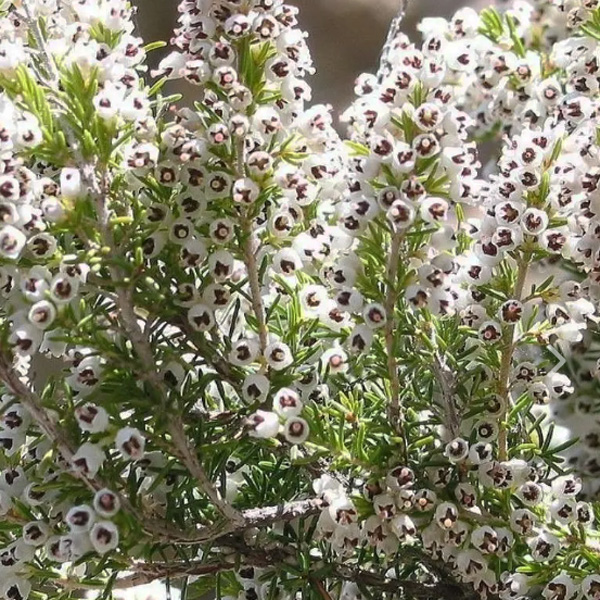
Erica multiflora
This many-branched shrubby heather (60 cm to 1 m) is very common in the dry woods and hillsides of the Mediterranean coast, from the Iberian Peninsula to Italy. Its small evergreen leaves are dark green. It blooms in soft pink from September to December, attracting bees. The inflorescences then turn reddish brown and remain on the plant. It is fairly frost-resistant (to -12°C) and tolerates alkalinity and dry conditions.
Erica multiflora
Cette bruyère arbustive (60 cm à 1 m) très ramifiée est très courante dans les bois et côteaux secs du littoral méditerranéen, de la péninsule ibérique à l’Italie. Les petites feuilles persistantes sont vert foncé. Elle fleurit rose tendre de septembre à décembre, attirant les abeilles. Les inflorescences deviennent ensuite rousses et persistent sur la plante. Elle est peu gélive (–12°C) et résiste au calcaire et au sec.
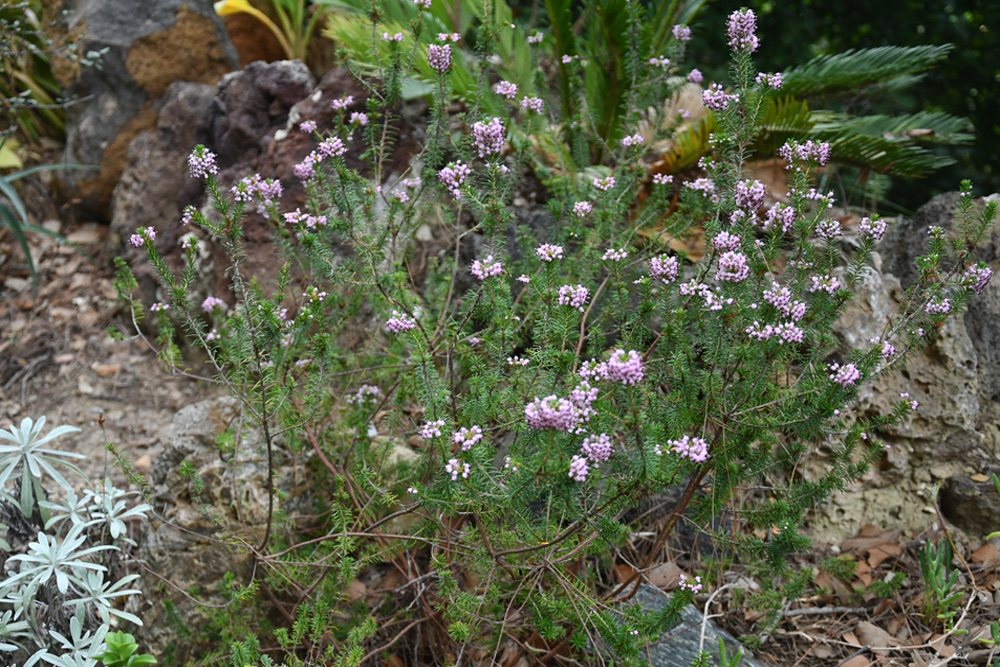
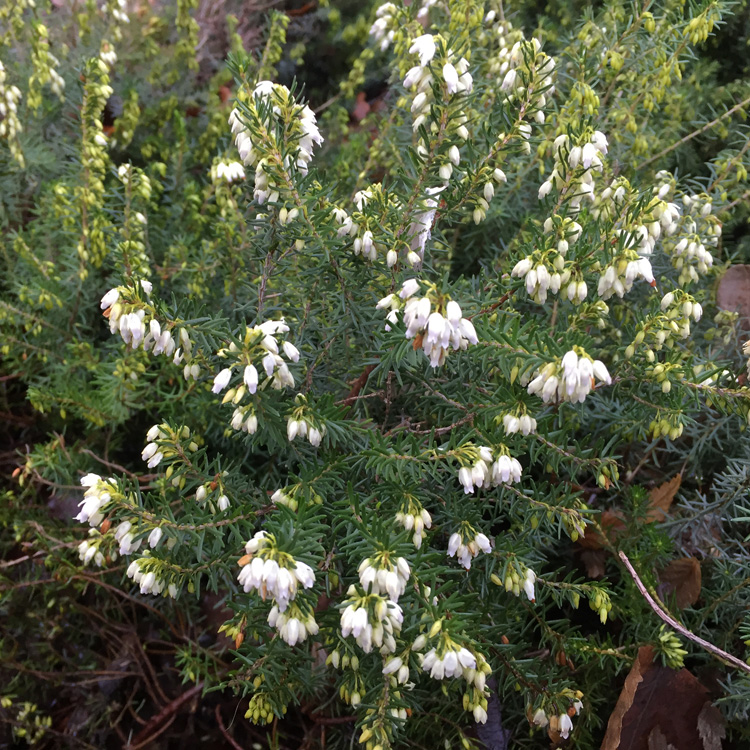
Erica manipuliflora
This heather, native to the eastern Mediterranean basin, is similar to the previous species in terms of size and flowering but is even more resistant to dry conditions. The anthura subspecies, native to Turkey and Crete, is interesting because of its more abundant flowers and longer flowering period.
Erica manipuliflora
Cette bruyère originaire de l’est du bassin méditerranéen est similaire à la précédente par sa taille et sa floraison mais résiste encore mieux au sec. La sous-espèce anthura, originaire de Turquie et de Crète est intéressante du fait de sa floraison plus abondante et plus longue.
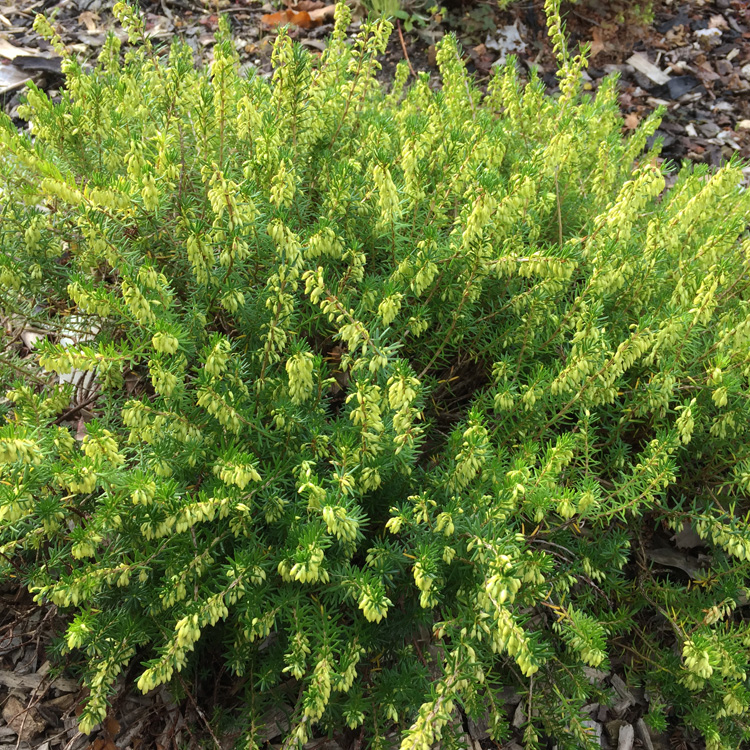
Erica terminalis
Corsican heather has a rounded shape (height and breadth 1 m), blooms pink to mauve from July to August, then turns coppery red throughout autumn as it dries. It is hardy and tolerates dry conditions, but less so than the previous varieties.
Erica terminalis
La bruyère de Corse a un port arrondi (1 m), elle fleurit rose à mauve de juillet à août puis devient rousse cuivrée tout l’automne en séchant. Elle est rustique et supporte le sec mais moins que les précédentes.
Other heathers
Other heathers are less suited to dry, chalky conditions. Erica x darleyensis, a pretty little heather that flowers all winter, tolerates slight alkalinity and requires a little water, as does Erica carnea, the alpine heather. Erica arborea is a tall Mediterranean arborescent heather (to 2 m) with white flowers from March to May. It is resistant to dry conditions but will not grow in alkaline soils.
Autres bruyères
Les autres bruyères sont moins adaptées aux conditions « sec et calcaire ». Erica x darleyensis, jolie petite bruyère qui fleurit tout l’hiver, ne tolère qu’un peu de calcaire et nécessite un peu d’eau, de même pour Erica carnea, la bruyère alpine. Erica arborea est une grande bruyère méditerranéenne arborescente (2 m) à floraison blanche de mars à mai. Elle résiste au sec mais ne tolère pas le calcaire.
Growing conditions, propagation, pruning
- Once established, heathers will be resistant to most weather conditions.
- Soil should be poor, stony or sandy, and well-drained.
- Water for 1 or 2 years after planting, then do not water at all (heather is sensitive to phytophthora).
- Position heathers in sun or partial shade. They tolerate root competition at the edge of pine or oak woods and are resistant to sea spray.
- Propagate by layering in spring or by taking semi-hardwood cuttings in late August or early September.
- Prune to maintain a compact shape. It is best to prune back a few centimetres after flowering, without cutting into the woody stems.
Conditions de culture, multiplication, taille
- Une fois installée, la bruyère sera très résistante.
- Sol : pauvre, caillouteux ou sablonneux, bien drainé
- Besoin en eau : suivre les arrosages 1 ou 2 ans à l’installation. Ne pas arroser ensuite (sensibles au phytophtora)
- Exposition : soleil ou mi-ombre ; supportent la concurrence racinaire en lisière de bois de pins ou de chênes et résistent aux embruns
- Multiplication : par marcottage au printemps ou par bouturage d’un rameau semi-ligneux fin août début septembre.
- Taille : pour garder un port compact, il est préférable de tailler après la floraison les rameaux défleuris sur quelques centimètres sans aller dans le bois.
Use in the garden. Heather gives a natural look to rockeries and flowerbeds. It is interesting to plant heathers in groups of three or more for a mass effect. They go well with winter-flowering plants such as hellebores, cyclamens and winter jasmine.
Utilisation au jardin. Les bruyères donnent un aspect naturaliste au jardin en rocaille ou en massif. Il est intéressant de grouper les bruyères par 3 ou plus pour un effet de masse. Elles s’associent bien avec des plantes à floraison hivernale, hellébores, cyclamens et jasmin d’hiver.
Texte : Roland Leclercq
Photos : Roland Leclercq and MGF photo library
